
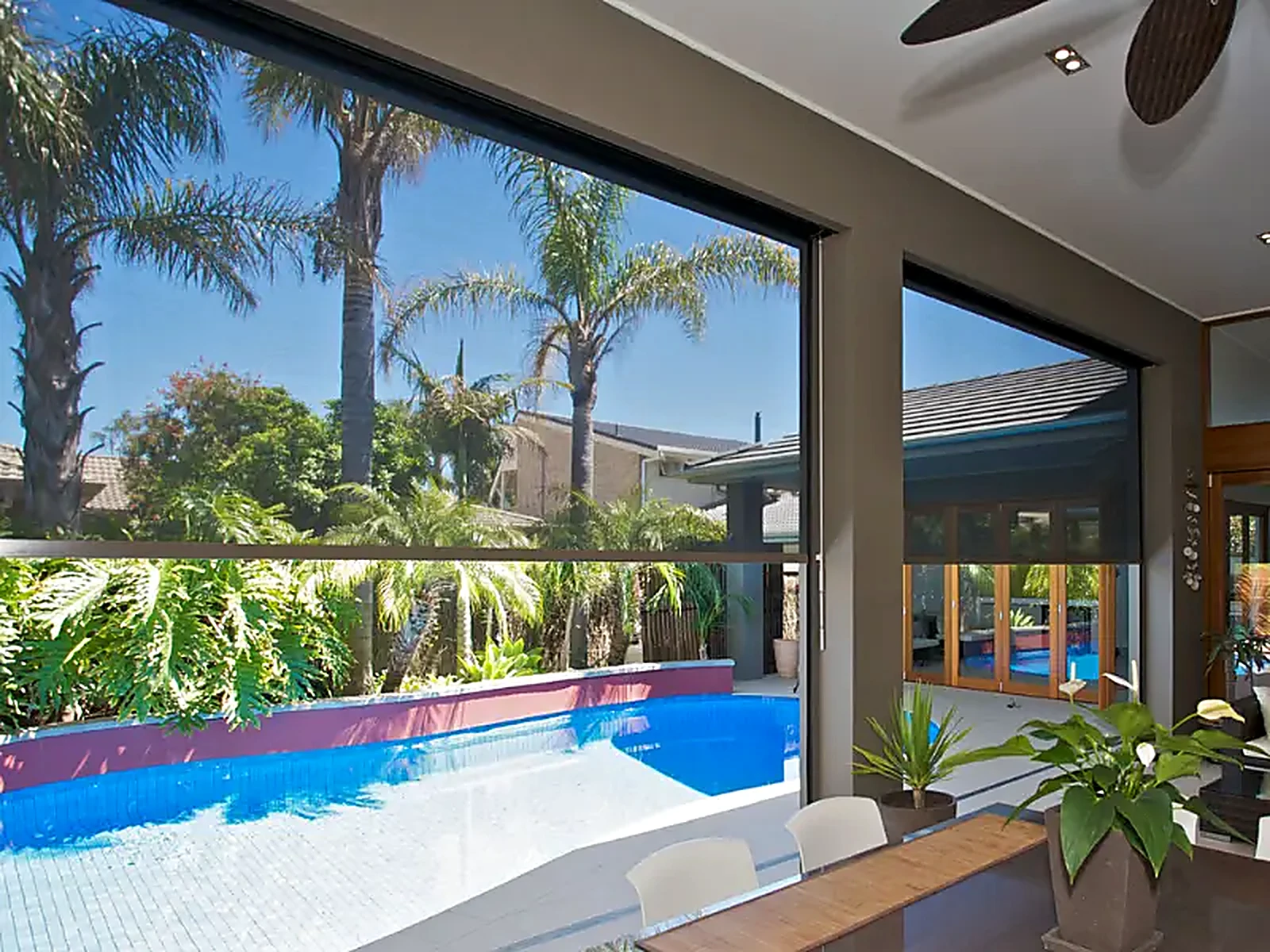
Why external shading beats internal blinds for heat in FNQ
Internal blinds manage glare. If the problem is heat, the fix needs to be outside the glass.
The most common thing we hear on a quote is that the western rooms are unbearable by mid-afternoon, and the blinds already fitted inside aren't helping.
That's expected. Once sunlight passes through glass, the heat is already inside the room. An internal blind can only absorb it and radiate it back at you.
Stop it outside, not inside
External shading, whether that's a track-guided Zipscreen, a drop awning, a folding arm awning or an aluminium louvre screen, intercepts the sun before it reaches the glass. The difference in a west-facing living room is immediate and obvious.
It also protects the glass, the flooring and the furniture that fades from direct sun.
Where each option makes sense
Zipscreen suits exposed patios and upper levels because the fabric runs in a side track and doesn't blow around. Drop awnings are a cheaper answer in sheltered spots. Folding arm awnings cover a deck without posts. Louvres and slats suit anywhere you want permanent shade and privacy with airflow.
The airflow trade-off
Blockout fabrics give you the most heat and rain protection, but they close the space in. Mesh fabrics keep the breeze and the view while still cutting most of the solar heat. On most FNQ patios, mesh is the better compromise.
If you're deciding between the two, look at what time of day the room is uncomfortable. Morning and afternoon sun on the glass is an external shading job. Glare on a screen or a TV is where internal blinds earn their keep.
More advice
Salt, dust and a wet season that finds every gap. Here's what actually decides whether a security screen lasts up here.
Automatic gates in Cairns: what to sort out before you orderSliding or swinging, motor sizing, power and safety. The decisions that make or break a gate install.
Free measure and quote, no pressure
We'll come out, measure up, show you the samples and give you a straight recommendation on what suits the property. Then it's your call.